

Attractions for Those Who Love History, Culture, and Unique Experiences
When people think about Iguassu, the first image that usually comes to mind is the famous Iguazu Falls. And for good reason. The attraction is one of the most renowned natural destinations in the world. However, limiting Iguassu to its waterfalls means missing out on a destination shaped by cultural diversity, the influence of different peoples, and experiences that combine history, spirituality, engineering, and nature.
Beyond the traditional trails and well-known attractions — especially if you are passionate about history — here are some ideas of what to do in Iguassu beyond the waterfalls.
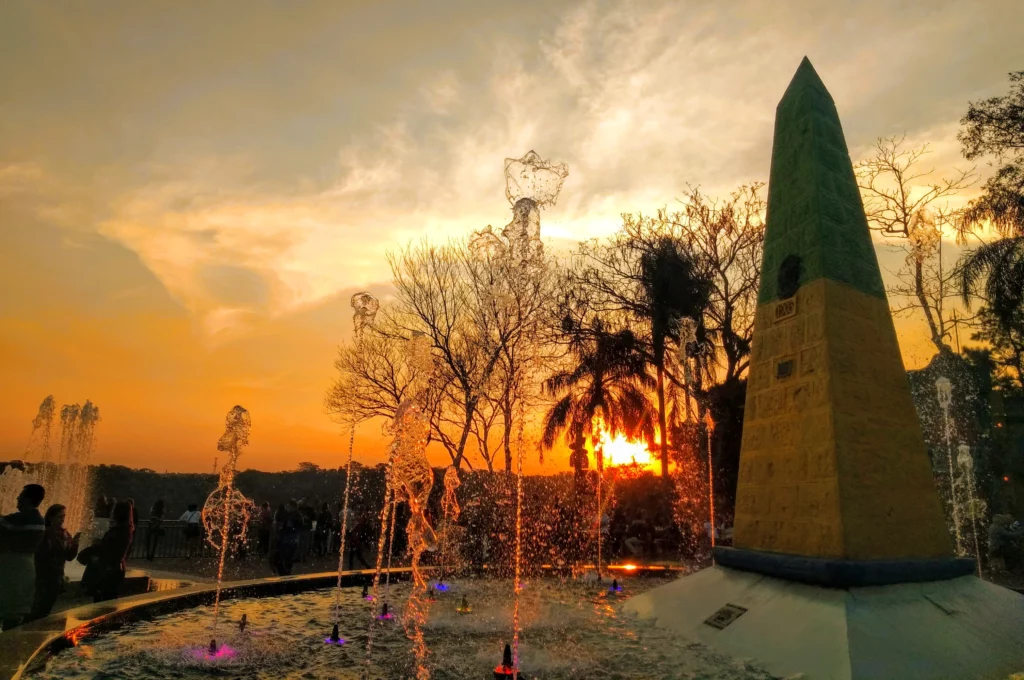
Three Borders Landmark: Where Three Countries Meet
One of the most symbolic places in the destination is the Three Borders Landmark. The attraction marks the meeting point of Brazil, Argentina, and Paraguay, exactly where the Iguaçu and Paraná rivers converge. More than just a geographical point, the site represents the multicultural formation of the tri-border region.
The area has undergone major revitalization in recent years and today offers cultural performances, restaurants, and one of the most famous sunsets in Iguassu. From the Brazilian side, visitors can simultaneously see the landmarks of the three countries, creating one of the most iconic views in the border region.
Beyond the scenery, the attraction also helps visitors understand the historical and strategic importance of the region for local development and the integration between neighboring countries.
Does Iguassu Have a Mosque and Arab Influence?
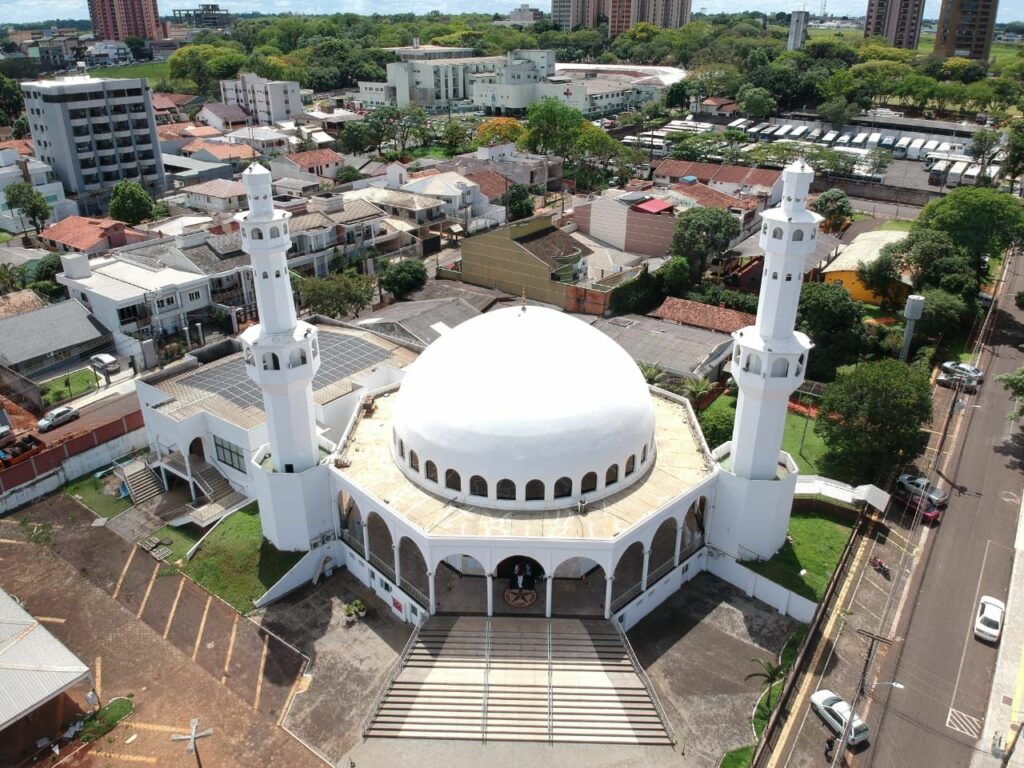
Yes. The strong presence of the Arab community in Iguassu is part of the local cultural identity. One of the main symbols of this influence is the Omar Ibn Al-Khattab Mosque, inaugurated in 1983 and considered one of the region’s main religious attractions.
The mosque stands out for its large white dome and towering minarets visible from afar. Inside, visitors find arabesque decorations, Islamic calligraphy, and ornamental details that create a true cultural immersion.
The site is open to visitors and often sparks curiosity even among those unfamiliar with Islam. Before entering, visitors remove their shoes, women receive veils, and men wear traditional robes as a sign of respect for local customs.
An interesting fact is that the region is home to the second-largest Arab community in Brazil. Because of this, the mosque has become not only a religious space but also an important cultural tourism attraction.
Itaipu Ecomuseum: Memory, Science, and Regional Transformation
For those interested in history and in understanding how the construction of the dam transformed the region, the Itaipu Ecomuseum is an essential stop.
The space houses more than 40,000 items related to archaeology, zoology, geology, botany, ethnography, and the history of Itaipu’s construction itself. The museum was created to preserve the region’s memory after the implementation of the hydroelectric plant and is considered a pioneer in Latin America within the ecomuseum concept.
In addition to the historical collection, the museum also offers interactive experiences such as “Science on a Sphere,” an immersive technology that allows visitors to visualize Earth’s phenomena through digital projections.
The experience helps visitors understand not only the scale of the Itaipu project but also the social, environmental, and cultural impacts caused by the construction of the hydroelectric plant in western Paraná.

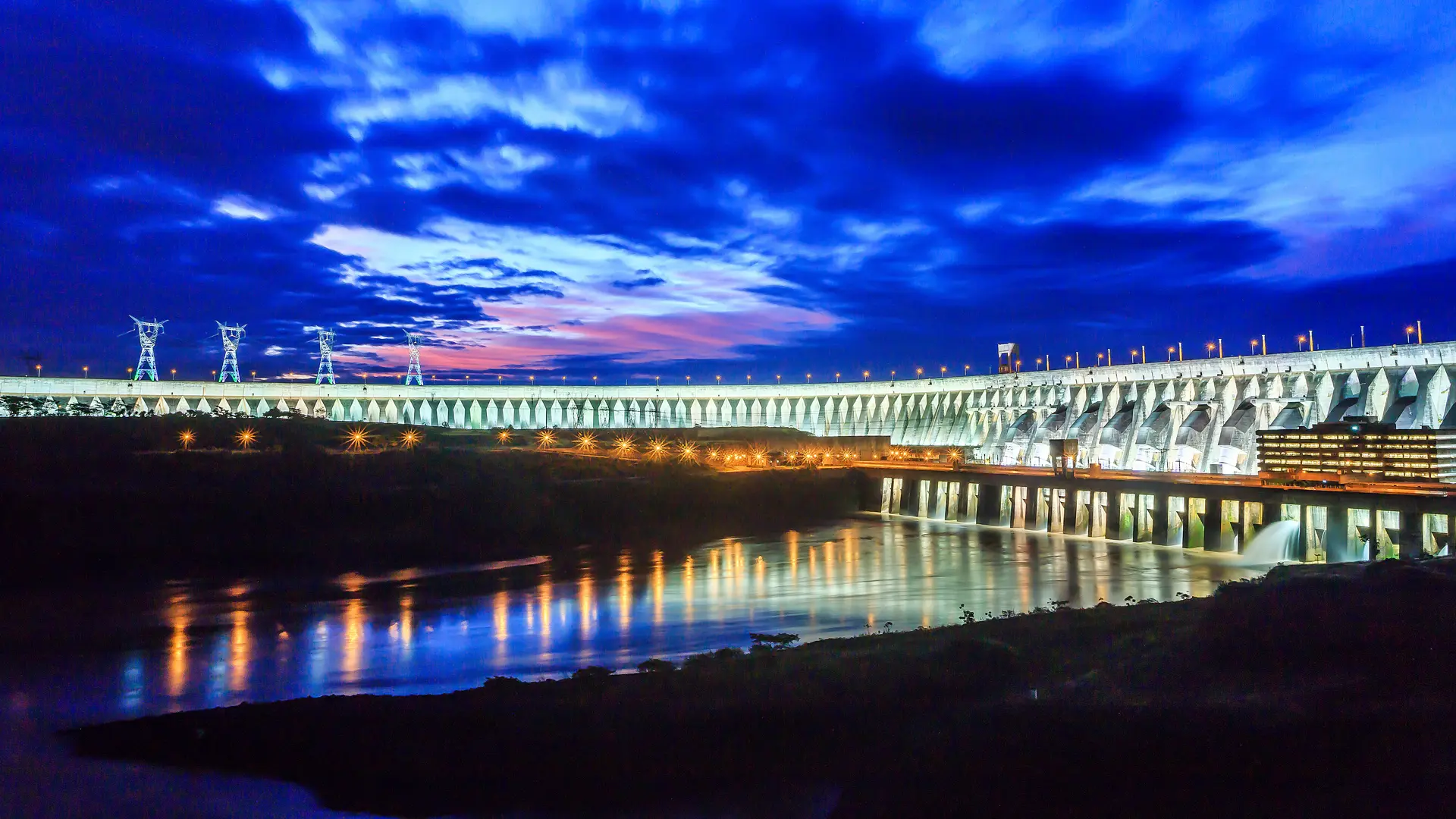
Itaipu Binacional: A Landmark of Engineering
Visiting Itaipu Binacional goes far beyond seeing a hydroelectric plant. The structure is one of the greatest engineering achievements in the world and completely transformed the economic and urban history of the border region between Brazil and Paraguay.
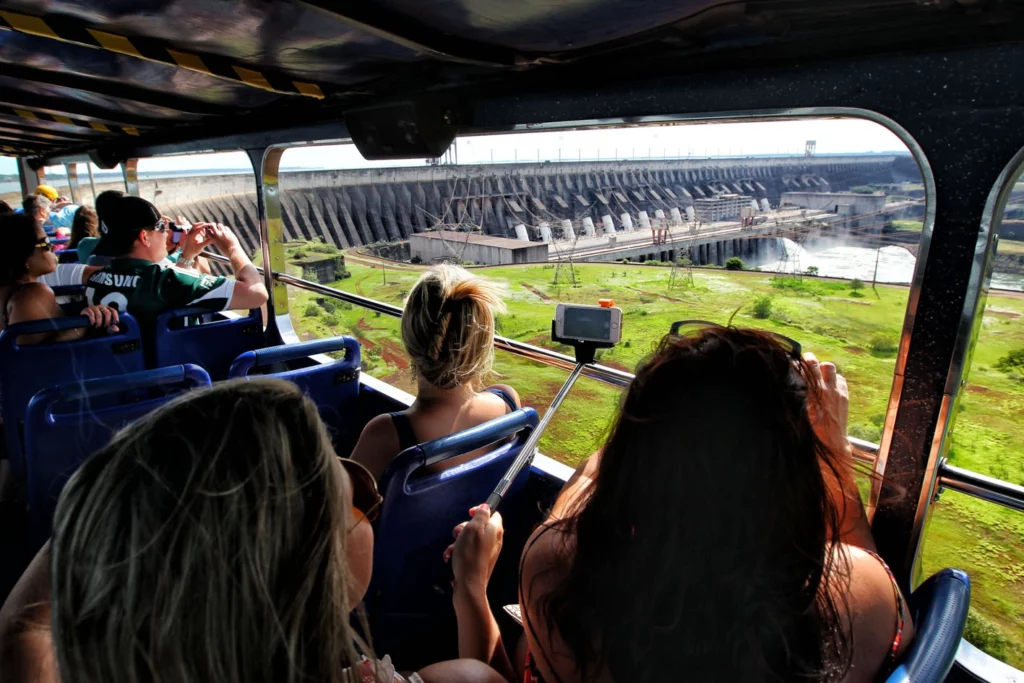
Tourist tours allow visitors to explore the spillway, viewpoints, and internal areas of the dam while discovering impressive facts about its construction and operation. The experience combines technology, sustainability, and political history between the two countries.
Even decades after its inauguration, Itaipu remains one of the greatest symbols of regional development and one of the most impactful attractions for those wanting to understand the grandeur of Iguassu.
Does Iguassu Have a Buddhist Temple?
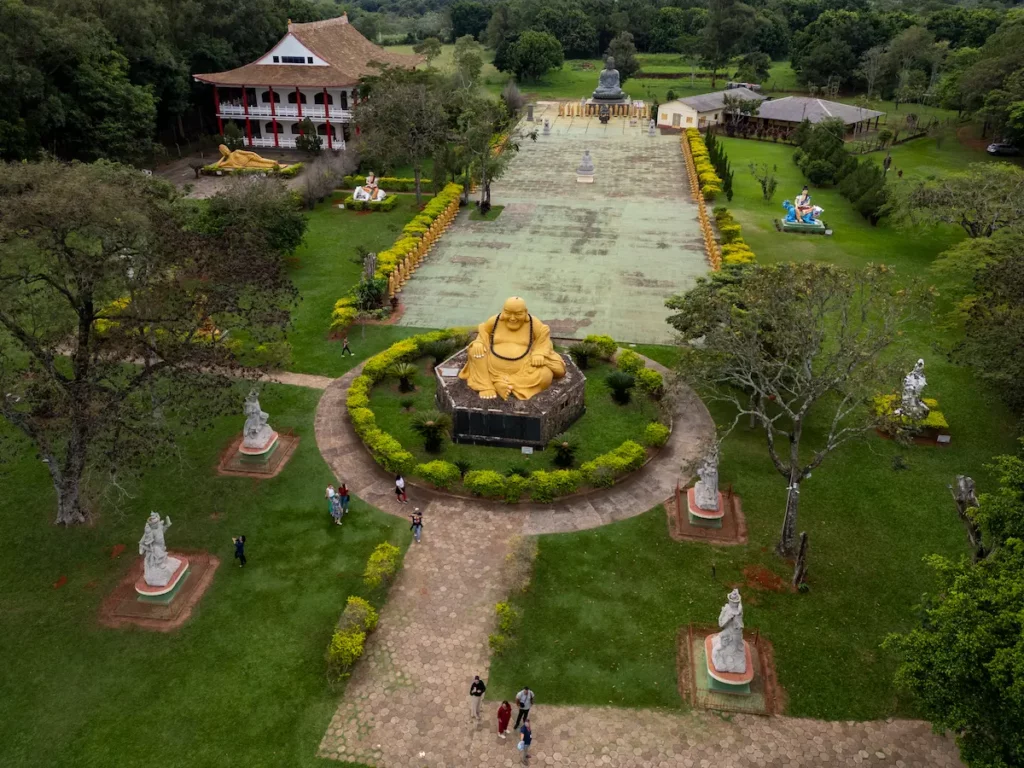
Another place that highlights Iguassu’s religious and cultural diversity is the Chen Tien Buddhist Temple. Located on an elevated area, the temple offers panoramic views of the border region, including parts of Paraguay and the Paraná River.
The site is known for its dozens of Buddhist statues spread throughout the gardens, as well as for its atmosphere of silence and contemplation, which contrasts with the intense rhythm of the border region. Among the sculptures, the main highlight is the statue of Maitreya Buddha positioned at the center of the complex.
Even for visitors who do not follow Buddhist philosophy, the attraction is often impressive because of the peaceful atmosphere and the symbolic richness found in every architectural detail.
Exploring Iguassu beyond the waterfalls means discovering a destination shaped by different cultures, religions, and histories. Within just a few kilometers, visitors can explore an Islamic mosque, a Buddhist temple, a trinational monument, and one of the world’s largest hydroelectric plants.
This contrast is precisely what makes Iguassu unique. The destination combines nature, cultural diversity, spirituality, gastronomy, and engineering in a single place, offering experiences that go far beyond traditional tourism.