

When people think of tropical forests in Brazil, the Amazon is usually the first destination that comes to mind. As the largest continuous rainforest in the world, it stretches across vast areas of South America and is home to an extraordinary diversity of ecosystems, wildlife, and river systems.
Yet Brazil’s natural wealth extends far beyond the Amazon. Along much of the country’s coastline and reaching deep into the interior lies the Atlantic Forest, one of the world’s most biodiverse tropical forests and one of Brazil’s most important natural treasures.
Although they have followed different paths of conservation and development, both the Amazon and the Atlantic Forest play a vital role in protecting biodiversity, regulating the climate, and supporting countless species of plants and animals.
Today, the Amazon still preserves extensive continuous areas of rainforest. The Atlantic Forest, however, has undergone significant transformation over more than five centuries of human occupation. As a result, only a fraction of its original vegetation remains, making every protected area critically important for conservation.
Despite these challenges, the Atlantic Forest remains one of the most biologically rich ecosystems on Earth. Its remaining forests support thousands of species and provide essential ecosystem services, including water protection, carbon storage, and habitat connectivity.
This is where Foz do Iguaçu becomes especially important. The city is located within one of the largest protected remnants of the Atlantic Forest in inland Brazil: Iguaçu National Park, home to the world-famous Iguazu Falls.
Why the Atlantic Forest is one of the most important Rainforests in the World?
The rainforest surrounding Iguazu Falls is part of a much larger ecosystem. The Atlantic Forest extends across 17 Brazilian states and includes a variety of forest types and habitats.
Recognized by UNESCO as the Atlantic Forest Biosphere Reserve, this vast territory covers nearly 90 million hectares and stretches approximately 6,750 kilometers along Brazil’s coastline while also reaching inland regions.
Over centuries of development, however, much of the original Atlantic Forest was cleared. According to the SOS Mata Atlântica Atlas, only 12.4% of the original forest cover remains when considering mature forest fragments without detectable degradation. Using a different methodology, MapBiomas estimates that 24% of the original forest cover survives when younger and mature forest fragments larger than half a hectare are included.
While these figures vary according to the criteria used, they highlight the importance of preserving large, connected areas of rainforest.
One of the most significant examples can be found in western Paraná, where Iguaçu National Park protects a vast stretch of Atlantic Forest near Iguazu Falls.
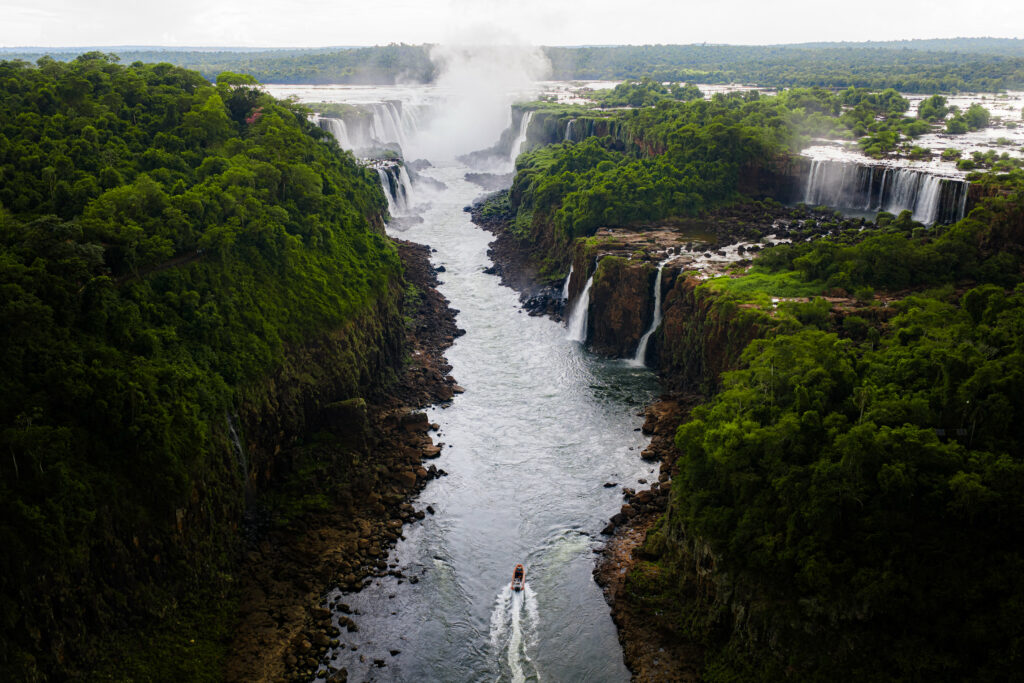
Explore the Atlantic Forest in Iguaçu National Park
Established in 1939, Iguaçu National Park covers 185,262 hectares and is one of the largest protected areas of the Atlantic Forest in Brazil.
The park is directly connected to Iguazú National Park in Argentina, creating an extensive forest corridor that helps preserve biodiversity across international borders.
This continuity is essential for wildlife conservation. Large protected areas allow animals to move freely, maintain healthy populations, and support ecological processes that are often disrupted in isolated forest fragments.
The landscape of Iguaçu National Park is dominated by Seasonal Semideciduous Forest, a characteristic ecosystem of western Paraná. The park also includes areas of Mixed Ombrophilous Forest, where the iconic Paraná pine (Araucaria) can be found, as well as wetlands and alluvial environments.
Plant diversity is remarkable. More than 700 species of terrestrial plants have been recorded within the park. Among them are the juçara palm, one of the most emblematic species of the Atlantic Forest, and the endangered pink peroba tree.
Wildlife is equally impressive. Researchers have identified approximately 158 species of mammals, 390 species of birds, 48 reptile species, 12 amphibian species, and 175 fish species within the protected area.
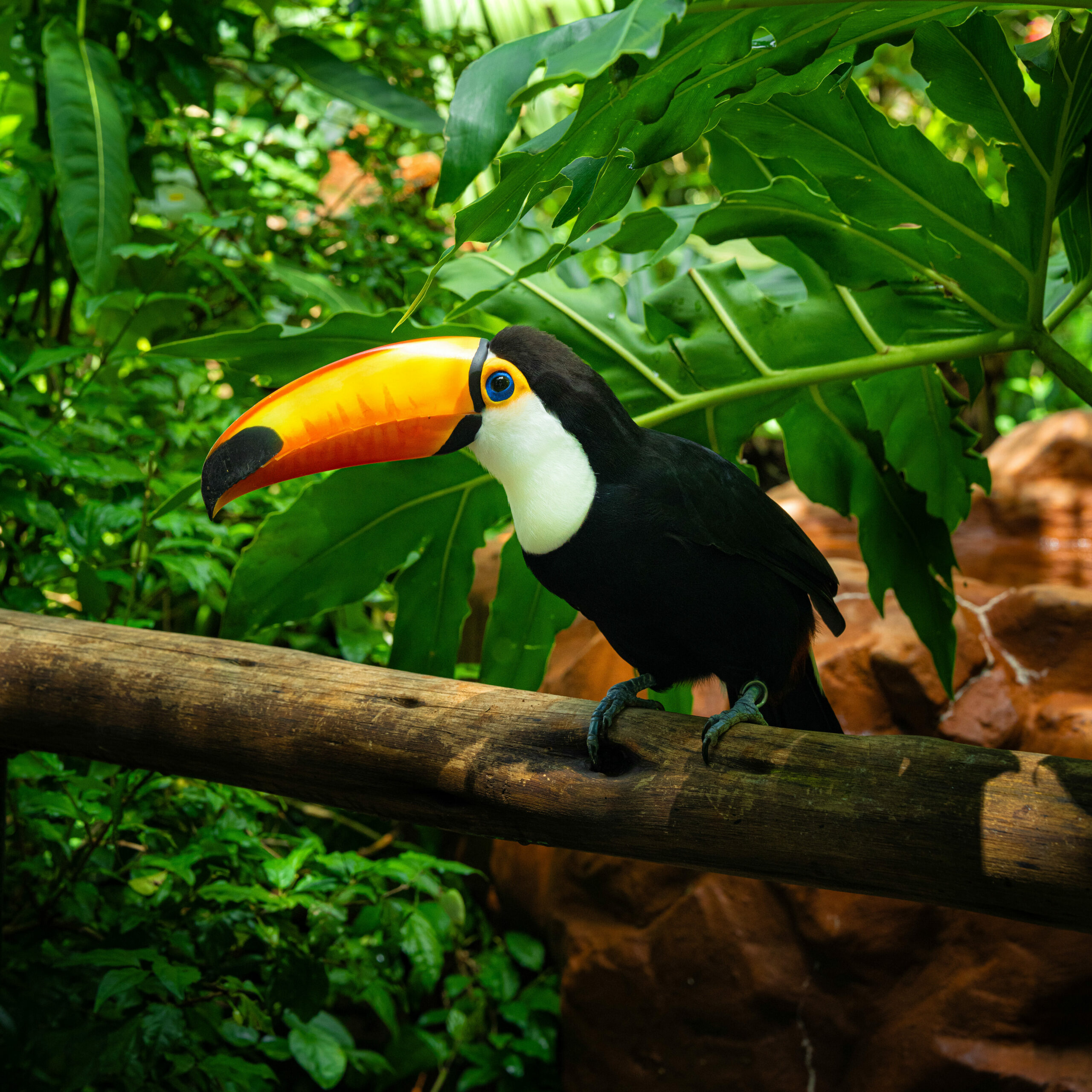
Visitors exploring the rainforest may encounter coatis, tapirs, deer, monkeys, anteaters, toucans, parrots, hummingbirds, and caimans.
Among all the animals living in the Atlantic Forest, the jaguar stands out as one of the most iconic. As the largest feline in the Americas, it serves as a top predator and an important indicator of ecosystem health. Its survival depends on large areas of connected rainforest and healthy populations of prey species.
How the Atlantic Forest Connects Brazil, Argentina and Paraguay?
One of the most fascinating aspects of the Atlantic Forest near Iguazu Falls is that it extends beyond national borders.
Iguaçu National Park in Brazil and Iguazú National Park in Argentina form part of a larger forest landscape shared by Brazil, Argentina, and Paraguay.
Wildlife does not recognize political boundaries. Many species depend on connected habitats for feeding, breeding, shelter, and migration. For this reason, conservation efforts are most effective when they are coordinated across borders.
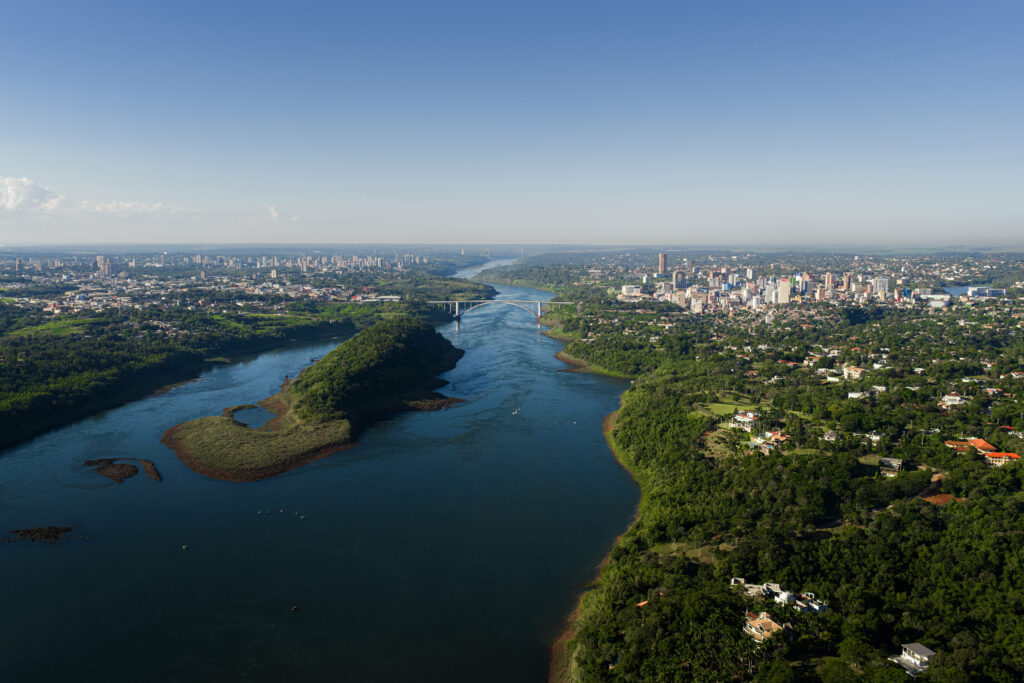
To better understand these changes over time, MapBiomas maintains a dedicated initiative that monitors the Atlantic Forest throughout the trinational region. The project provides annual land-use and land-cover maps from 1985 to 2023 across Brazil, Argentina, and Paraguay.
These data help researchers, conservationists, and visitors see the Atlantic Forest not only as a beautiful destination but also as a dynamic ecosystem that continues to evolve over time.
Best Places to Experience the Atlantic Forest in Foz do Iguaçu
For visitors, there are many ways to experience the Atlantic Forest while exploring Foz do Iguaçu.
The most famous experience is found inside Iguaçu National Park. The iconic Falls Trail takes visitors through the rainforest before revealing breathtaking views of Iguazu Falls, one of the world’s most spectacular natural wonders.
However, the experience extends far beyond the waterfalls. Additional trails and activities allow visitors to explore different habitats within the park and discover the incredible biodiversity of the Atlantic Forest.
Experiences such as the Macuco Safari bring travelers closer to the Iguaçu River and offer a unique perspective of the rainforest environment surrounding the falls.
Nearby attractions also contribute to conservation and environmental education. Bird Park (Parque das Aves) is dedicated to protecting Atlantic Forest species and is one of the best places to observe native birds up close. AquaFoz showcases aquatic biodiversity, while the Bela Vista Biological Refuge, maintained by Itaipu Binacional, supports research, conservation, and environmental education programs.
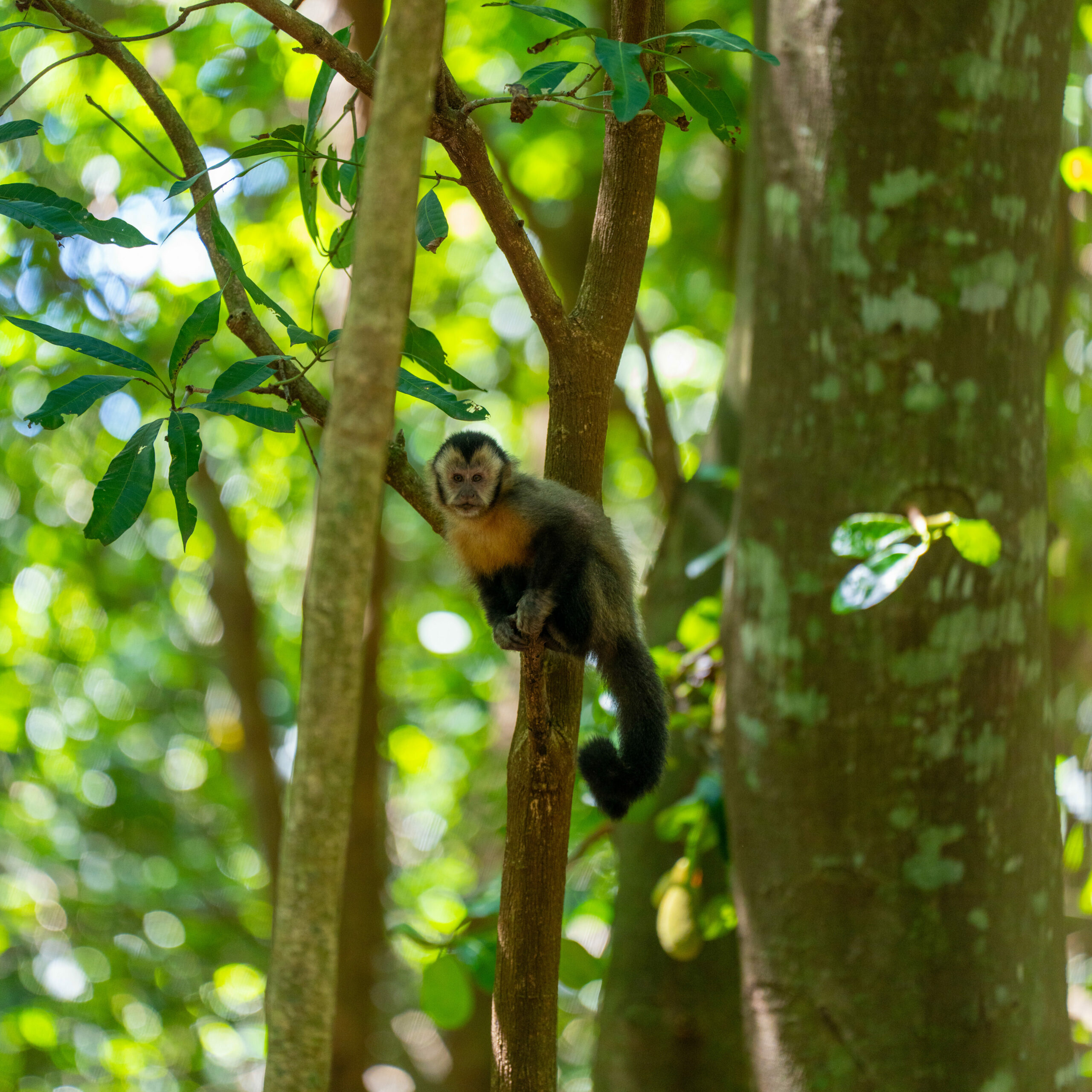
Whether you’re interested in wildlife, conservation, hiking, or simply immersing yourself in nature, the Atlantic Forest surrounding Iguazu Falls offers one of the most rewarding rainforest experiences in Brazil.
Learn more about the attractions that showcase the Atlantic Forest in Foz do Iguaçu.