
Learn about the temporary restrictions
Imagem: PNI/Urbia Cataratas
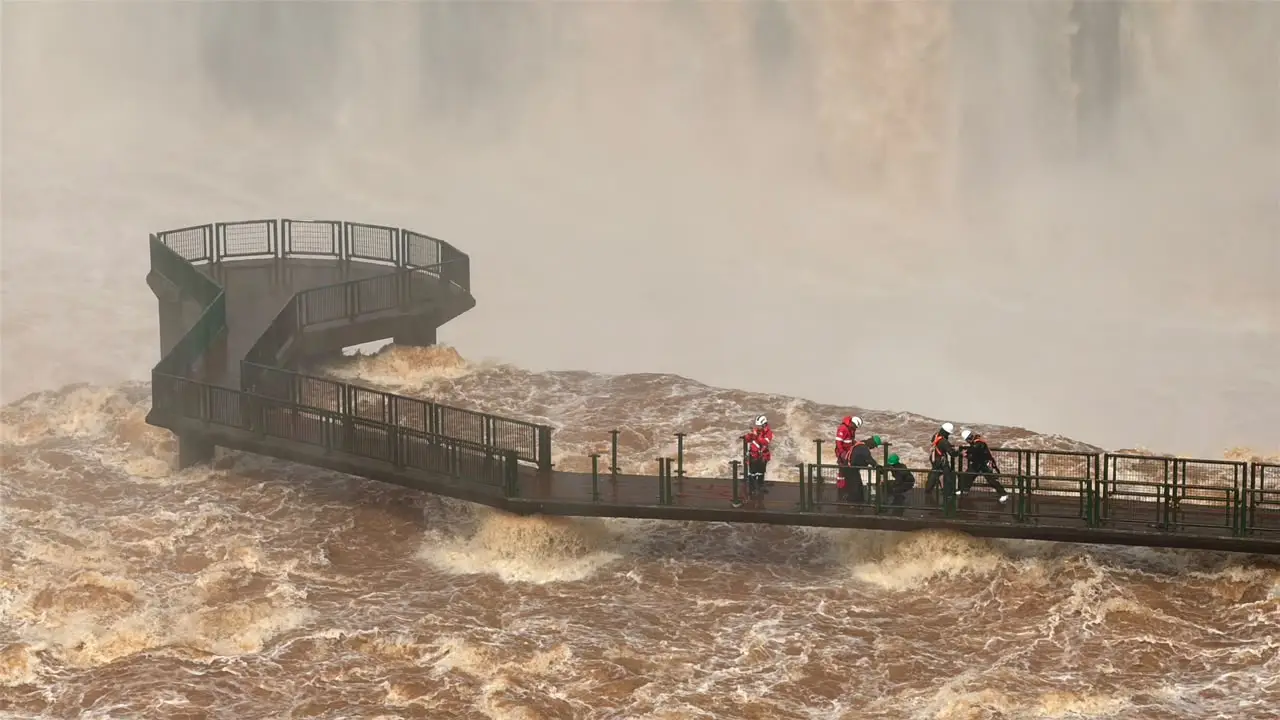
Rising water levels in the Iguassu River have prompted safety measures to protect the structure of the Iguassu Falls walkway and ensure visitor safety. On Tuesday (October 13), teams began removing the walkway’s safety railings for the first time since 2023, in anticipation of a further increase in water flow. Today, Wednesday (October 14), at 10 a.m., the latest available reading showed a flow rate of 15.7 million liters per second, approximately 10.5 times the historical average of 1.5 million liters per second.
The procedure is part of a safety protocol implemented during periods of flooding. Removing the railings allows water to flow through the structure with less resistance, reducing the risk of damage caused by the force of the current.
The decision depends on river conditions and is made by the teams responsible for the attraction’s operation and safety, with the involvement of civil rescue personnel.
How does the safety protocol work?
The measures implemented at the walkway vary according to the Iguassu River’s flow rate and whether water levels are expected to continue rising.
The walkway is closed as a precaution when the flow rate exceeds 8.5 million liters per second and is expected to increase. The railings are removed when the flow rate is between 9 million and 12 million liters per second and continues to rise.
Reopening depends on the flow rate falling to levels considered safe, a technical assessment of the structure, and authorization from a specialized engineer. Therefore, no reopening date can be determined in advance.
Iguassu National Park remains open
Despite the flooding, Iguassu National Park remains open to visitors. The Waterfalls Trail is still accessible, except for sections that have been temporarily closed for safety reasons.
In addition to the walkway, other areas have been temporarily closed as a precaution due to rising river levels. These include the lower lookout point at Espaço Naipi, the São João Circuit, Espaço Usina, the Poço Preto Trail, and the Canafístula Trail. The Bananeiras Trail remains closed for construction work.
Teams from Urbia+Cataratas and the Chico Mendes Institute for Biodiversity Conservation (ICMBio) continue to monitor river conditions and the park’s attractions. Reopening closed areas will depend on safety assessments.
How can you monitor the Iguassu River’s flow rate?
Copel, Paraná’s state-owned electricity company, provides information on hydrological conditions in the Iguaçu River Basin through its monitoring platform. The tool allows users to check data from different monitoring stations throughout the basin.
To follow the latest readings, visit the Iguassu River Basin Monitoring page on Copel’s website.
What should visitors know before visiting the Falls?
Anyone planning to visit Iguassu National Park during the flooding period should check which attractions are operating before setting out. Since restrictions may change depending on the river’s flow rate, visitors should consult the park’s official channels for the latest updates.
The flooding has temporarily restricted access to certain areas, but visitors can still enjoy the attractions cleared for operation by the responsible teams. Visitors are advised to follow all signs and comply with temporary closures throughout this period.